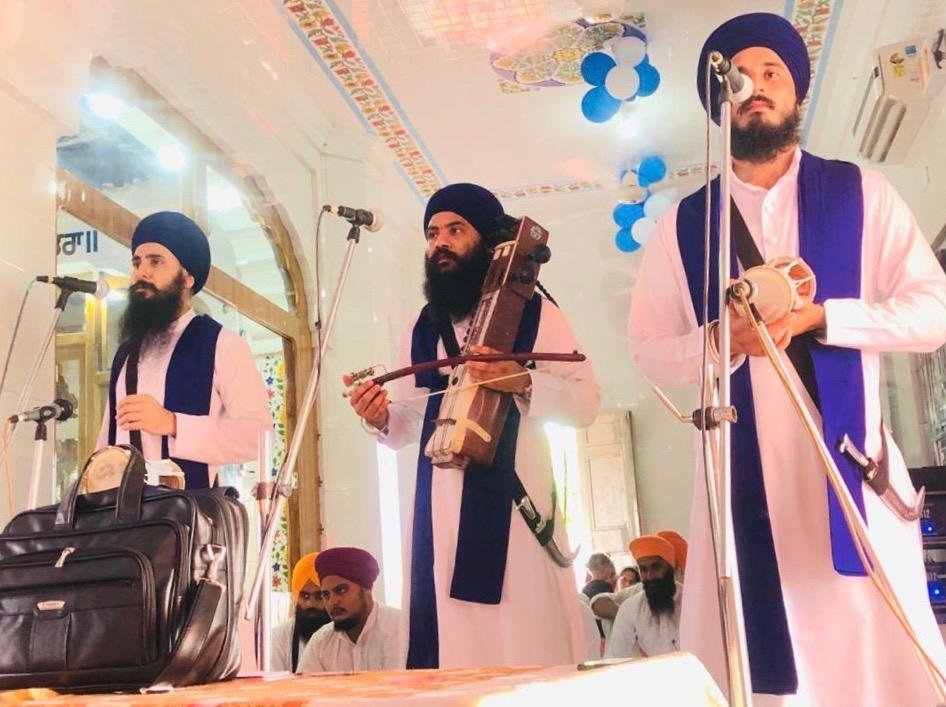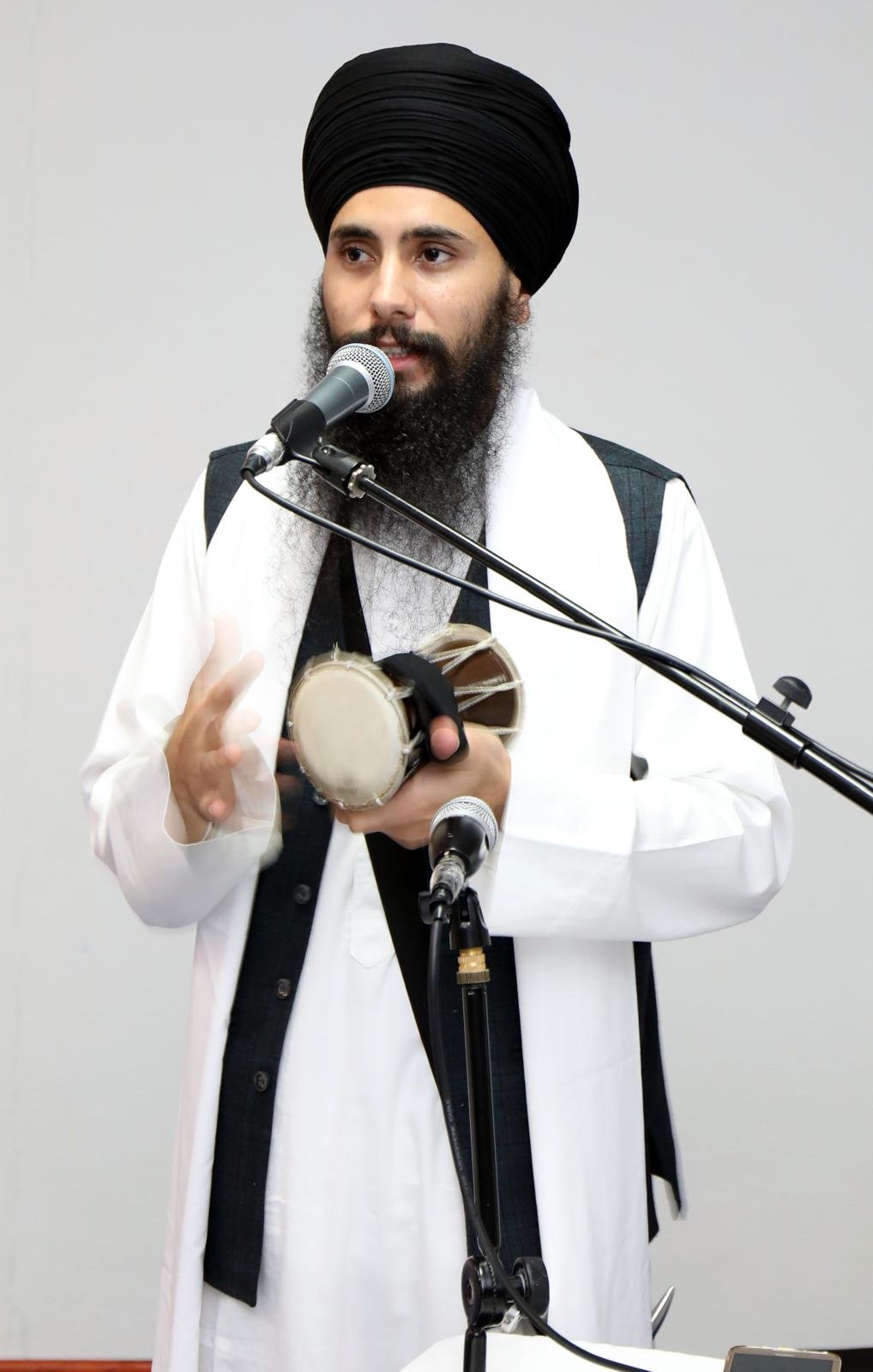
The Dhad is small enough to hold in one hand. It is shaped like an hourglass, with skin heads at each end and a cord running along its waist. Squeezing the cord tightens the heads and raises the pitch; releasing it lowers the pitch. A skilled player can make the drum rise and fall with the emotion of the line being sung.
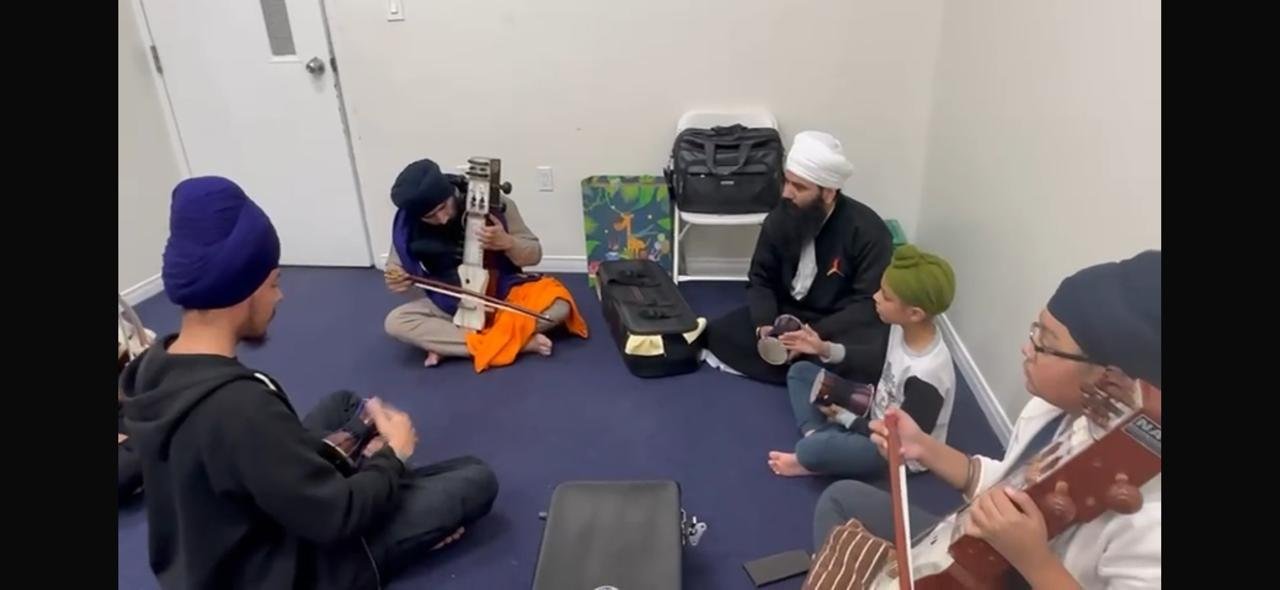
The Sarangi is bowed, carved from a single block of wood, with a skin-covered belly and gut strings alongside a set of sympathetic strings that ring on their own. It follows the singer's voice almost exactly, a half-beat behind, so that the melody feels doubled rather than accompanied.
Together they produce something neither can produce alone. The Dhad supplies urgency — the sound of hooves, of drums on a battlefield, of a heartbeat quickening. The Sarangi supplies grief and tenderness. A Vaar about a Shaheed needs both: the rush of the charge and the weight of what was lost.
All members of the Jatha have received formal musical education and training alongside their Santhia of Sri Guru Granth Sahib Ji. The instruments are not ornament — they are how the history is delivered.